Hong Huat Website & CMS
A Thai-English corporate publishing platform with structured APIs for products, industries, articles, careers, and contact workflows.
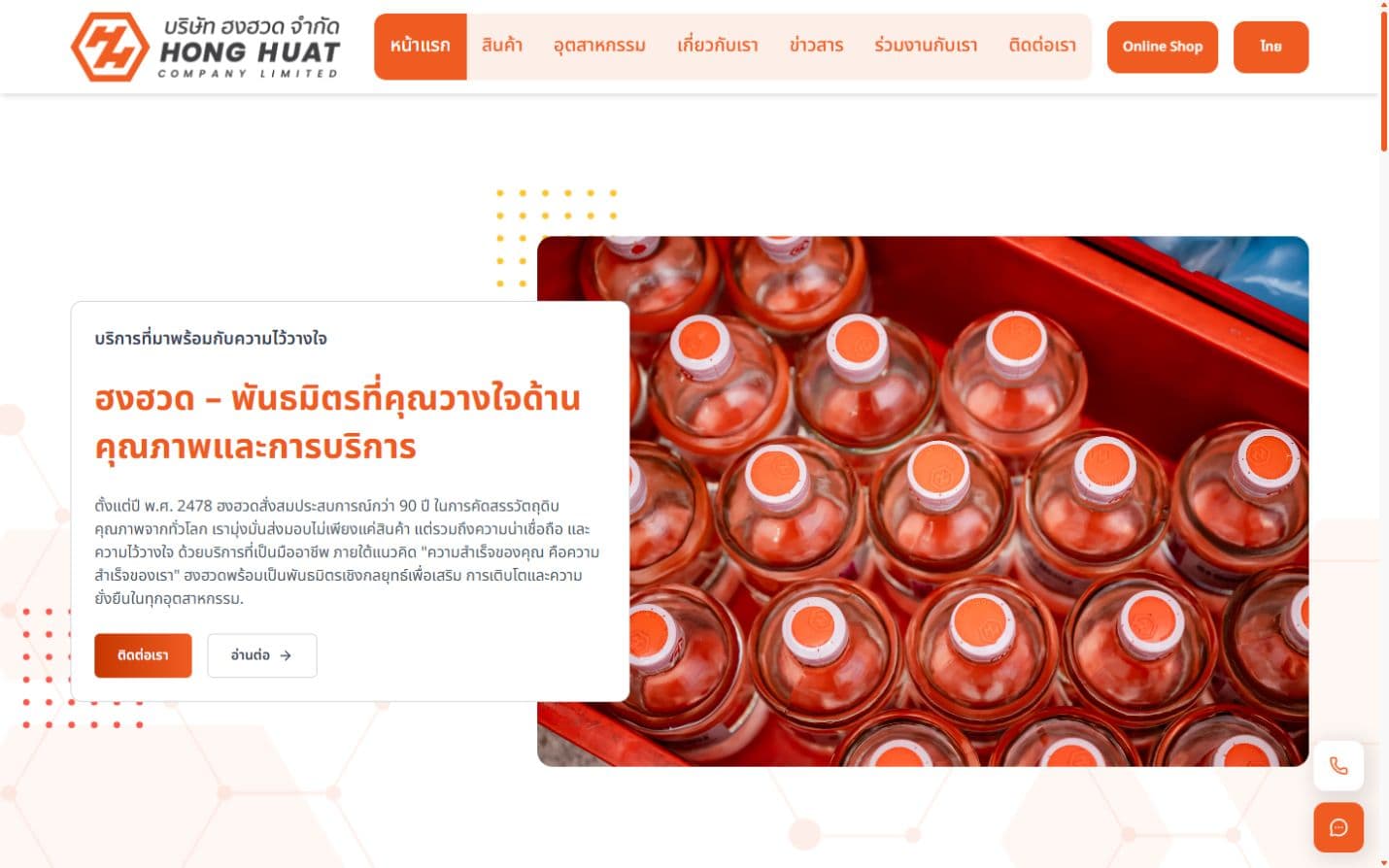
Project introduction
Hong Huat is a multilingual corporate website and content platform for products, industries, company information, news, careers, customer references, and contact information.
What I worked on
- Implemented responsive, localized pages with Next.js App Router and next-intl
- Built NestJS modules for homepage content, products, industries, blogs, banners, careers, policies, contacts, files, and customer logos
- Connected structured Prisma/PostgreSQL content to reusable Thai and English presentation components
- Added validation, throttling, reCAPTCHA, and email handling to public contact workflows
- Supported deterministic content migrations and Docker-based environments
Architecture
Authorized workflows manage structured business content through protected APIs. NestJS validates and persists records with Prisma and PostgreSQL, while the Next.js website requests localized data and renders it through shared components. MinIO-compatible storage handles managed files.
Outcome
Company content can evolve independently from public-page code while remaining consistent across languages and devices.
How the main product workflows operate
Structured Thai and English content moves from protected editing to reusable public pages
Hong Huat models business content by domain instead of saving entire pages as opaque blobs. Products, industries, articles, careers, banners and policies each have explicit translation and media relationships.
Protected admin · NestJS · Prisma · PostgreSQL · Next.js
Dedicated translation models keep language values aligned with the same product, industry, article or page section.
The website consumes products and content through stable contracts rather than reading administration-shaped tables directly.
Editors can update structured records and media while reusable frontend components preserve presentation consistency.